
Reliable Energy: Delivering on the Promise of Gas-Electric Coordination
(2025)
About this Report
America’s energy reliability is at risk. As natural gas and electricity become more interdependent, outdated infrastructure and fragmented coordination threaten outages and rising costs. These risks arise from the fundamentally different commercial, regulatory, and operational frameworks that govern the gas and electric sectors. The gas industry is built around long-term contracts and predictable demand, while the electric sector depends on real-time market dispatch and hourly price signals. Pipelines—originally built to serve steady loads from local distribution companies—are now expected to support a power sector that increasingly relies on gas-fired generation for both baseload and fast-ramping capacity. This increasing volatility in pipeline operations, along with the growing demand for electricity, compromises the ability of independent generators to secure fuel and exposes local distribution companies to heightened risk.
The gas and electric industries have worked to address these misalignments since the early 1990s, beginning with efforts to reconcile operational and scheduling differences. Yet these steps were incremental as they did not resolve underlying economic and structural misalignments of the two markets. Additionally, many recommendations were only partially implemented. The NPC report makes it clear: we need urgent, coordinated action—comprehensive planning, permitting reform, and investment in fit-for-purpose infrastructure—to keep the lights on and homes warm. These recommendations represent a strategic opportunity: by improving coordination between the natural gas and electric systems, the United States can establish a benchmark for reliability and resilience, leveraging abundant North American natural gas resources to strengthen the grid.
About the Study Participants
The study was directed by a Study Committee composed of senior leaders from the natural gas and electric power industries, along with representatives from government, academia, and public interest organizations. The Coordinating Subcommittee oversaw the development of scope areas, supported by Task Groups focused on specific technical and policy issues. This structure is designed to ensure that a broad range of expertise and perspectives are incorporated into the analysis, deliberations, and recommendations of the NPC.
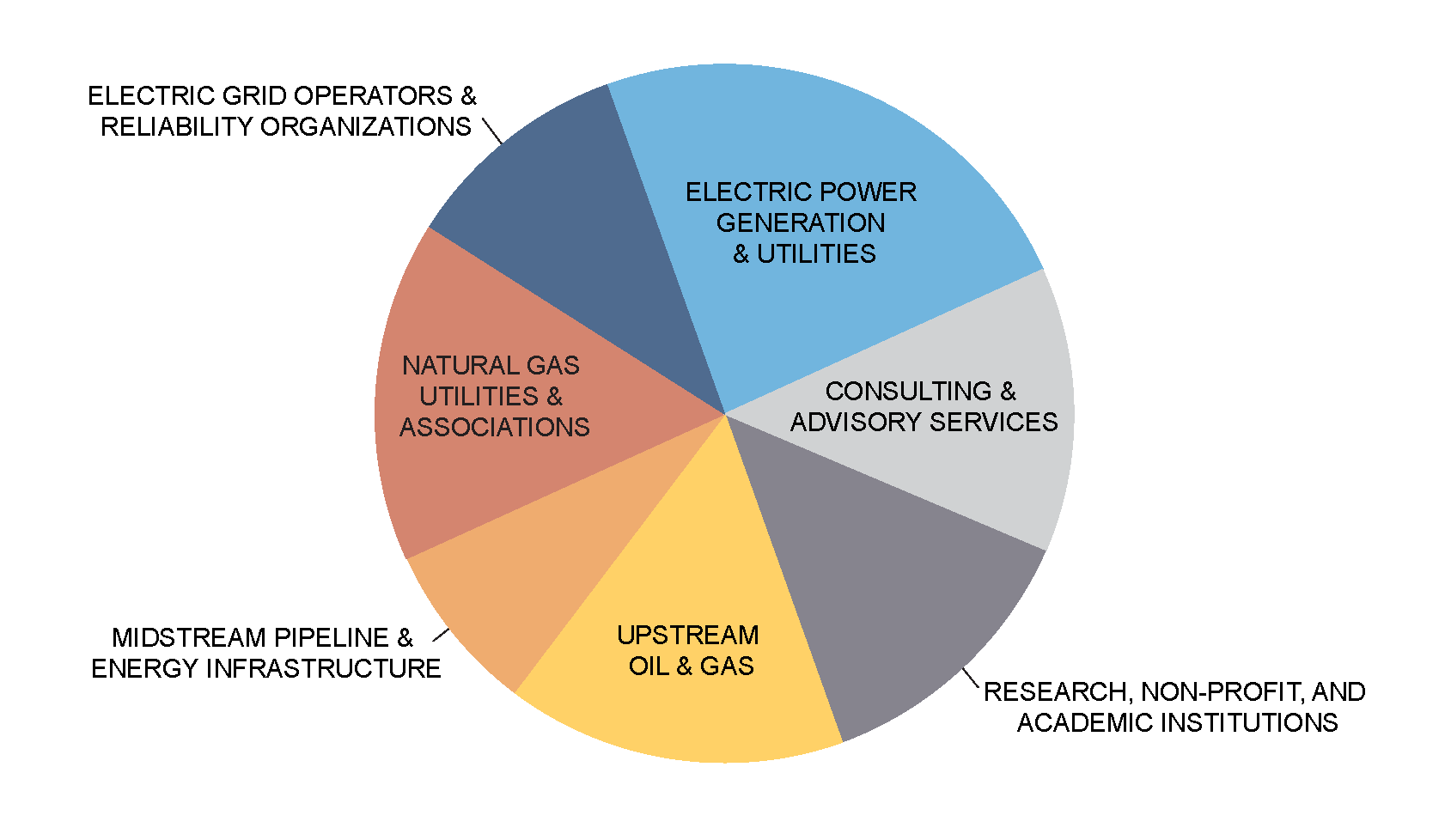
Organization representation by sector on the Study Committee, Coordinating Subcommittee, and Task Groups.
About the National Petroleum Council
The National Petroleum Council (NPC) is an organization whose sole purpose is to provide advice to the federal government. At President Harry Truman's request, this federally chartered and privately funded advisory group was established by the Secretary of the Interior in 1946 to represent the oil and natural gas industry's views to the federal government: advising, informing, and recommending policy options. During World War II, under President Franklin Roosevelt, the federal government and the Petroleum Industry War Council worked closely together to mobilize the oil supplies that fueled the Allied victory. President Truman's goal was to continue that successful cooperation in the uncertain postwar years. Today, the NPC is chartered by the Secretary of Energy under the Federal Advisory Committee Act of 1972, and the views represented are considerably broader than those of the oil and natural gas industry.
Council members, about 200 in number, are appointed by the Energy Secretary to assure well-balanced representation from all segments of the oil and natural gas industry, from all sections of the country, and from large and small companies. Members are also appointed from outside the oil and natural gas industry, representing related interests such as large consumers, states, Native Americans, and academic, financial, research, and public-interest organizations and institutions. The Council provides a forum for informed dialogue on issues involving energy, security, the economy, and the environment of an ever-changing world.